

Why this is harder than it looks
There is no single MLS. Hundreds of separate organizations each have their own contract, credentials, and interpretation of the standard.
RESO has made this far better than it was. The Data Dictionary provides common field names, and the Web API provides a common transport. But local deviations persist, and every integration ends up with a mapping layer it did not budget for.
Display rules are the part that surprises teams. What you may show, for how long, and with what attribution varies by MLS, and it is a contractual obligation rather than a technical one.
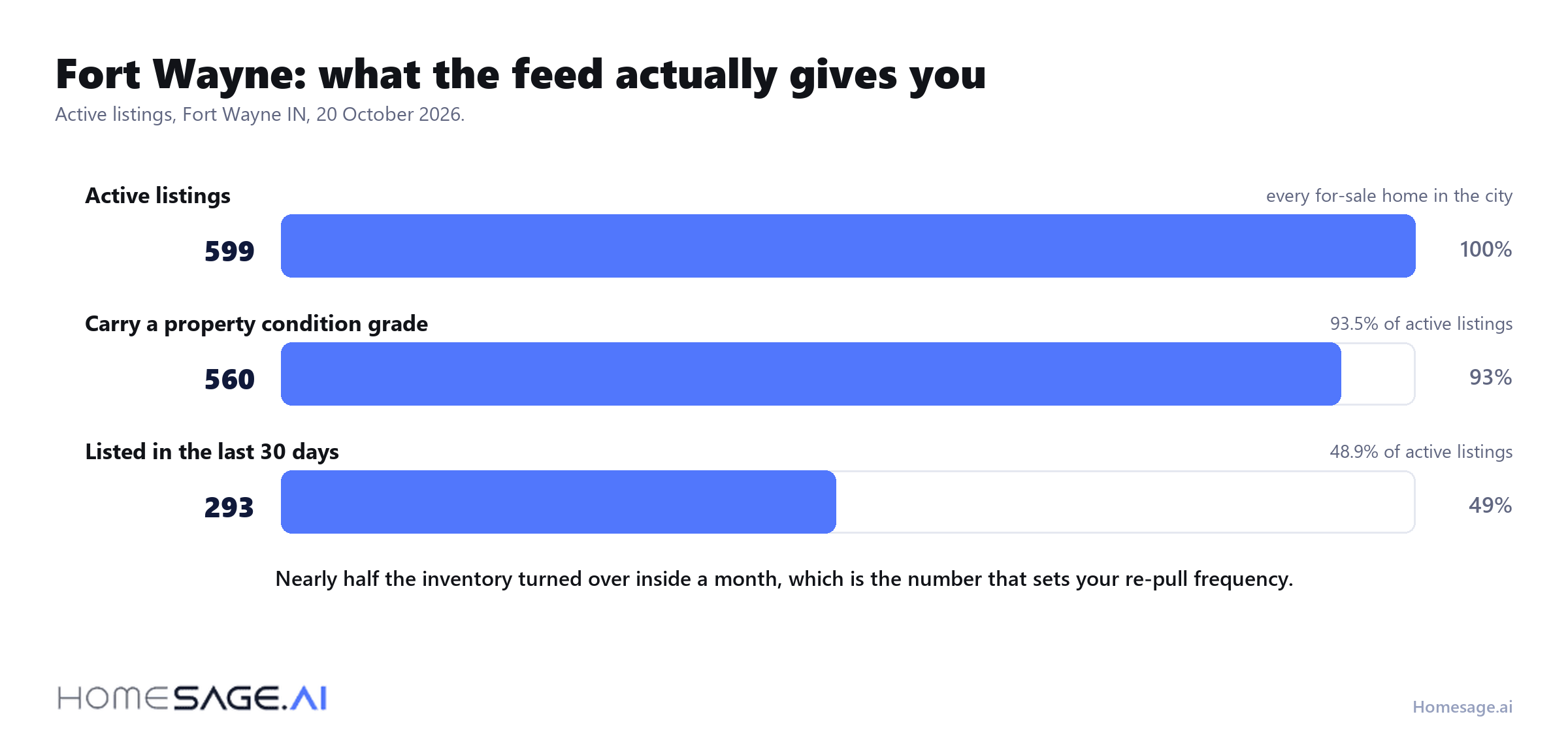
And the feed only carries what agents entered. Property condition, renovation cost and projected return are not MLS fields, which is why most products layer something on top.
Build with this data
Software developers can pull this kind of data straight from the Homesage.ai real estate APIs. Start with these 2 endpoints.
The 3 methods developers actually use
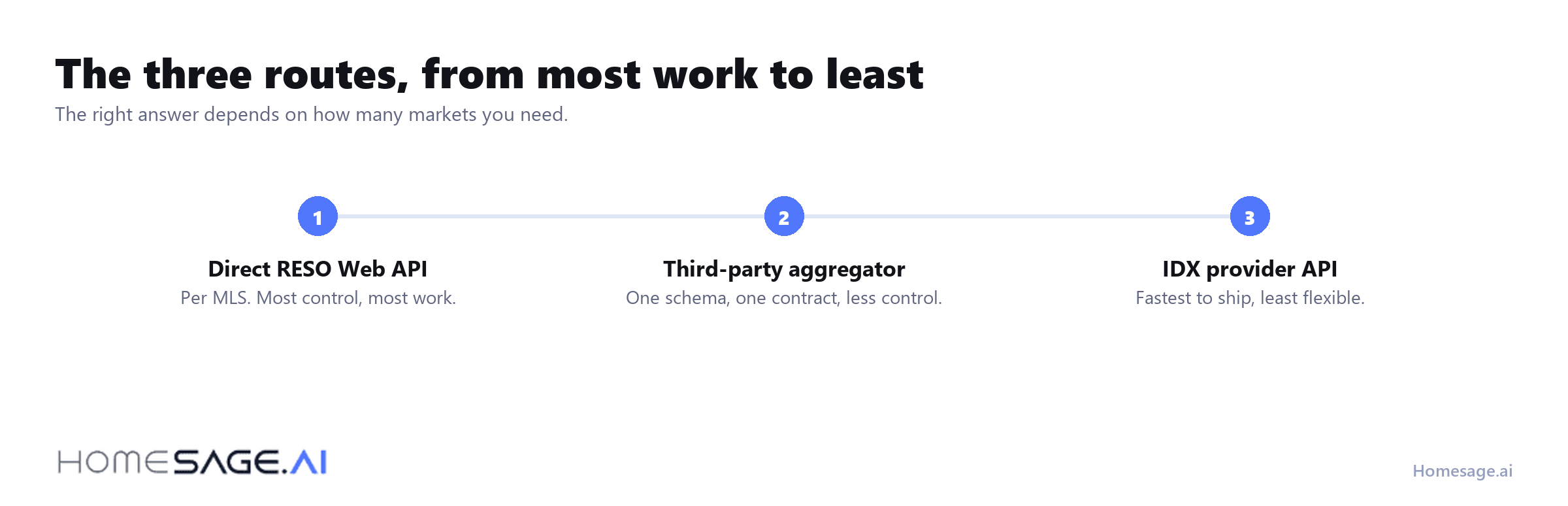
1. Direct RESO Web API integration
Direct RESO Web API integration means contracting with each MLS and pulling from its endpoint yourself.
You get the full field set, the fastest updates and no intermediary margin. You also get per-MLS credentials, per-MLS display rules and a mapping layer for every local deviation from the dictionary. For one or two markets it is clearly right. For twenty it becomes most of your engineering.
Best for: Products serving a small number of markets deeply.
2. Third-party MLS aggregator
A third-party MLS aggregator contracts with many MLSs and hands you one normalized schema across all of them.
You trade some freshness and some margin for not maintaining dozens of integrations. Ask which MLSs are actually covered in your markets. Ask how often each is re-pulled. And ask whether display rules are enforced for you or left to you.
Best for: Products that need many markets without a large data engineering team.
3. IDX provider API
An IDX provider API packages listing search and display as a near-finished component, usually aimed at agent and brokerage websites.
It is the fastest route to a working listing search, and the most constrained. You generally cannot restructure the data, join it to your own models, or keep it beyond the session. That’s fine for a brokerage site. For a product with its own analytics, it becomes a ceiling quickly.
Best for: Agent and brokerage sites that need search and display, not data.
How the three compare
| Method | Control | Markets | Effort | Best for |
|---|---|---|---|---|
| Direct RESO Web API | Full | One at a time | High | Deep single-market products |
| Aggregator | Good | Many at once | Medium | Multi-market products |
| IDX provider | Limited | Varies | Low | Brokerage and agent sites |
Effort here means ongoing maintenance, not initial build. Direct integrations are not much harder to start and considerably harder to keep running.
What the feed actually gives you
Two numbers shape an MLS integration more than the method does: how much of the inventory carries the field you need, and how fast the inventory turns over. We measured both across all 599 active listings in Fort Wayne, Indiana on 20 October 2026.
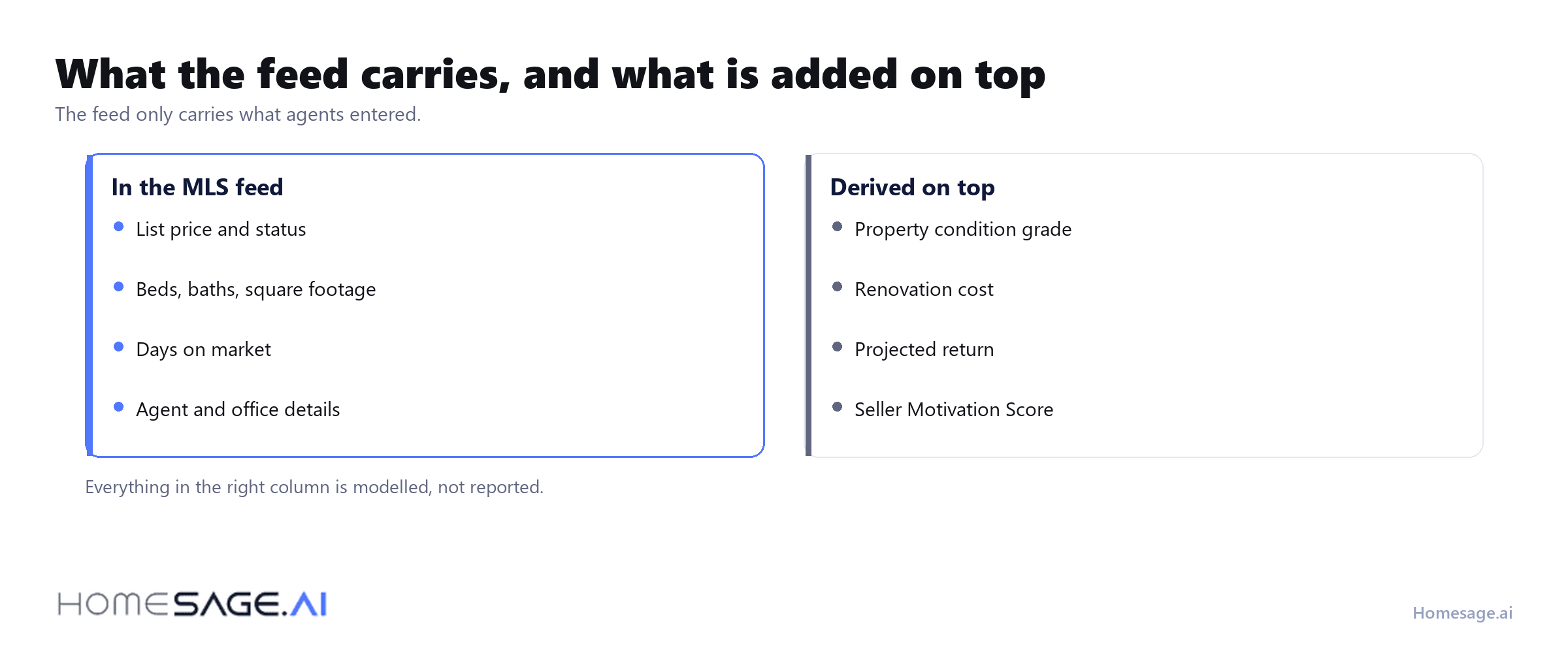
A property condition grade exists on 560 listings, or 93.5%. That field is not in the MLS feed. It is derived from the listing photographs, which is why products that need it layer a model on top of whatever integration method they chose.
293 listings, or 48.9%, were listed within the last 30 days.
Nearly half the inventory turned over inside a month. That sets your re-pull frequency, not your preference.
That turnover figure should set your re-pull frequency. A nightly refresh on a market where half the inventory changes inside a month will show users listings that are already gone. Stale inventory is the most common complaint about listing products.
Both percentages are shares of all 599 active Fort Wayne listings on the day we counted.
How to choose
Count your markets first. One or two favors direct integration. More than a handful favors an aggregator, almost regardless of team size.
Then ask what you need to do with the data. If you intend to join listings to your own models, IDX is usually a ceiling rather than a floor.
Then read the display rules before the technical documentation. They are contractual, they differ by MLS, and they constrain the product rather than the pipeline.
Whatever you choose, plan the layer above it. For the APIs supplying fields the MLS does not carry, see the best property data APIs, and the best property evaluation APIs for valuation specifically.
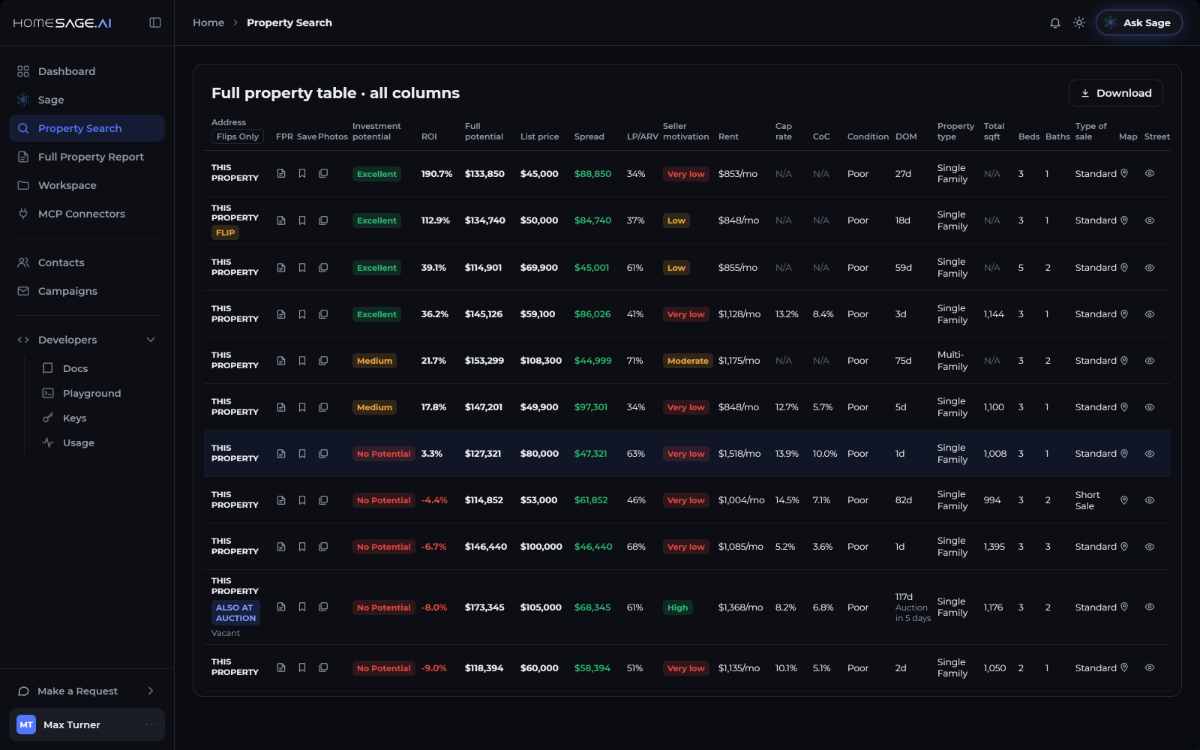
Estimated values, after-repair values, renovation costs and returns are model-derived estimates, not investment advice. Property data as of 19 October 2026.
Key takeaways
- There is no single MLS. There are hundreds, each with its own contract and its own deviations from the standard.
- Direct RESO integration suits one or two markets. Aggregators suit many. IDX suits brokerage sites.
- Display rules are contractual and vary by MLS. Read them before the technical documentation.
- The feed carries what agents entered. Property condition and return are derived fields, added on top.
- In Fort Wayne 48.9% of listings were under 30 days old, which is what should set your re-pull frequency.
Conclusion
Count your markets, decide what you need to do with the data, and read the display rules early. The method matters less than the layer you build above it, because the fields that differentiate a property product are not in the MLS feed at all. Set your refresh against real turnover rather than a convenient schedule.
Frequently asked questions
What is the best method for MLS data integration?
It depends on market count. One or two markets favor a direct RESO Web API integration. Many markets favor an aggregator. A brokerage website that only needs search and display is usually best served by an IDX provider.
Is RETS still usable?
RETS is retired in favor of the RESO Web API, and new integrations should target the Web API. Some older systems still expose RETS, but building against it now means building against something already scheduled to disappear.
Can developers access MLS data without a real estate license?
Generally, you need a relationship with the MLS. That usually means working with a licensed broker, or using an aggregator or IDX provider who holds that relationship. The requirement is contractual, not technical.
What does an MLS feed not include?
It carries what agents entered: price, size, rooms, photographs, status and remarks. It does not carry a property condition grade, a renovation estimate or a projected return. Those are derived fields, which is why most products add a layer above the feed.





Jane May 12, 2026
Good article!
Peter May 12, 2026
Very helpful for developers
Emma May 13, 2026
Insightful!
Robin May 13, 2026
Very helpful!