
What a property lien means
A lien is a legal claim against a property for a debt. It stays attached to the property, so it has to be paid or cleared before the title passes cleanly to a buyer.
A mortgage is the most common lien. The CFPB's closing rules also list tax liens and judgments against the seller among the debts paid off at closing.
- Mortgage: a loan secured by the property, recorded with the county.
- Tax lien: a claim for unpaid property or income taxes.
- Judgment lien: a court judgment against the owner, attached to the property.
- Screening or title search: a screening reads public records, and a title search by a title company confirms them before closing.
A real example from a Homesage.ai report
We ran a Mortgage and Liens check on a single-family property listed for sale in Phoenix, Arizona, on 14 October 2026. It is a screening from public records, not a title search.
| What the screening returns | What it tells you |
|---|---|
| Open liens | Recorded claims with no release on file |
| Current mortgages | Loans still secured by the property |
| Original loan amount | The amount borrowed when the loan was recorded |
| Estimated outstanding | An estimate of the balance left to pay off |
| Loan type and rate | Residential or commercial, fixed or adjustable |
| Recording date | When the county recorded the loan |
| Term | The loan length and the date it matures |
| Older mortgages on file | Loans from earlier owners, each needing a recorded release |
The report shows these fields as one table for each property. Compare the recording date of each open loan with the last sale in the property's history. A loan recorded on the sale date belongs to the current owner.
The screenshot below shows the same section on a second property, an Atlanta listing, with every value hidden.
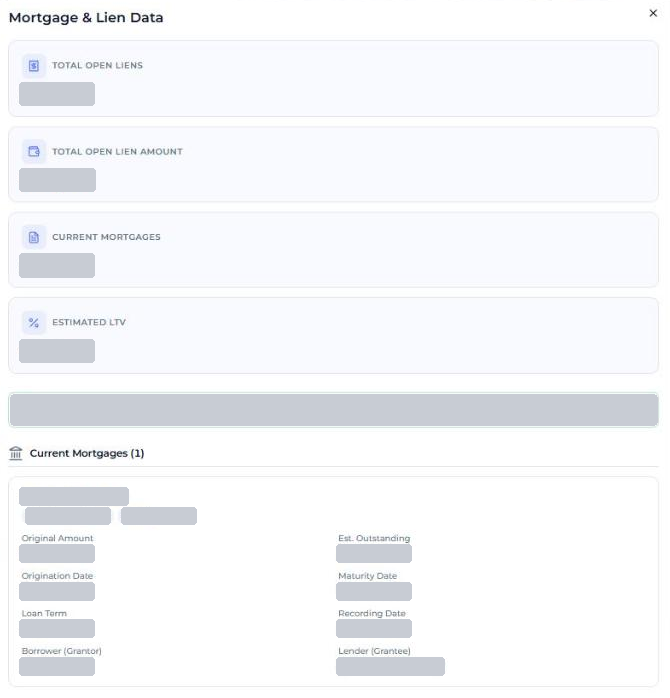
A lien screening lists what the county recorded. A title search confirms what was released.
The older mortgages on file belong to earlier owners. A screening lists them, and a title search confirms that each one was released.
How to work out whether a property has a lien
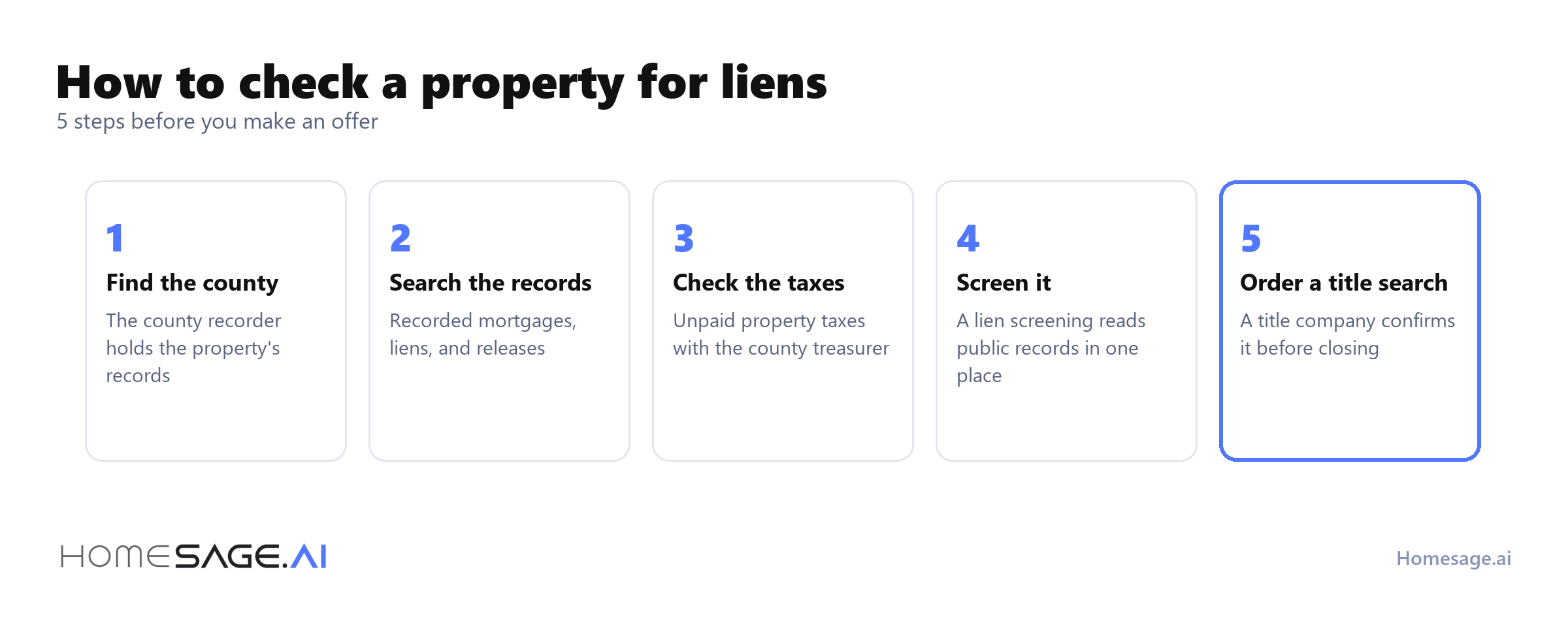
- Find the county. The county recorder holds the property's recorded documents.
- Search the recorder's records for mortgages, liens, and releases against the property.
- Check the county treasurer for unpaid property taxes.
- Run a lien screening to see the recorded loans and open liens in one place.
- Order a title search from a title company before you close. The CFPB guide to title insurance explains what the search and policy cover.
What a lien screening can and cannot show
A screening shows what is recorded. On the Phoenix property, it listed the open loan and every older mortgage on file in 1 table.
A screening cannot confirm that every older loan was released, or catch a lien recorded after the date you run it. That is the title company's job before closing.
Common lien check mistakes to avoid
- Treating a screening as a title search: A screening reads public records. Order a title search before you close.
- Ignoring a recent loan: Check each recording date against the last sale. A loan recorded on the sale date belongs to the current owner and comes off at closing.
- Forgetting property taxes: Unpaid taxes sit with the county treasurer, not always with the recorder.
- Assuming older mortgages are paid off: Older loans need a recorded release. A title search confirms it.
Frequently asked questions
How do I find out if there is a lien on a property?
Is a mortgage a lien?
Can I buy a property that has a lien?
What is the difference between a lien screening and a title search?
Who pays off a lien when a property sells?
Ask Sage about the loans on any property
Sage, our assistant, runs a mortgage and lien screening on any US address from inside the AI tool you already use.
- Homesage.ai Mortgage and Liens check for a single-family property in Phoenix, Arizona (85015), run 2026-10-14. Lien amounts, dates, lenders, and document numbers are left out.
- CFPB, Regulation Z 1026.38, content of the Closing Disclosure, read 2026-10-14.
- CFPB, shop for title insurance and other closing services, read 2026-10-14.