
House flippers in 2026 are navigating a market that has fundamentally changed. According to ATTOM's 2025 Home Flipping Report, the typical flipped home generated just $65,981 in gross profit last year, a 25.5% return on investment, the lowest since 2008. At the same time, the average flip takes 163 days from purchase to resale, and renovation costs continue outpacing resale value gains in most markets.
Explore the full playbook on AI real estate investing.The math is unforgiving. A $40,000 miscalculation in either ARV or rehab budget can eliminate your entire margin. That's precisely why experienced real estate investors are shifting from spreadsheets and contractor guesstimates to AI tools that deliver data-driven ARV estimates and renovation cost projections in seconds.
Homesage.ai gives real estate investors access to AI-powered property intelligence across 155M+ US properties, covering ARV modeling, renovation cost estimation, property condition scoring, and investment potential analysis in a single platform. This post breaks down how to use these tools strategically at every stage of a flip.
Why ARV Accuracy Is the Highest-Leverage Variable in Any Flip

After-Repair Value is the foundation every other number in a flip depends on. Get it right and your maximum allowable offer, renovation budget, and profit projection all line up. Get it wrong and no amount of hustle on the rehab saves the deal.
Traditional ARV estimation relies on manually pulling 3-5 comparable sales, making subjective adjustments for condition and location, and hoping those comps are recent enough to reflect current market conditions. In fast-moving markets, comps from even 60-90 days ago can misrepresent current buyer demand.
AI-powered ARV tools solve this by processing hundreds of comparable transactions simultaneously, adjusting for property-specific features: square footage, lot size, condition grade, renovation scope, and updating continuously as new sales data comes in. This is what makes AI tools for estimating ARV genuinely useful rather than just faster: they reduce the error margin that kills deals.
A $300,000 ARV property with $50,000 in rehab costs allows a maximum offer of $160,000 under the 70% rule. If your ARV estimate is off by $30,000 in either direction, your offer ceiling shifts by $21,000. In a compressed-margin market, that gap is the difference between a profitable deal and a break-even or loss.
How AI Renovation Cost Estimation Protects Your Budget
Renovation budgeting is where most flippers bleed money. National averages for kitchen remodels, bathroom upgrades, or roofing replacements vary enormously by market, labor availability, and property-specific conditions. A contractor quote based on a walkthrough catches surface issues; it rarely accounts for hidden structural problems, code compliance costs, or local permit delays.
AI renovation cost estimation tools analyze historical rehab project data alongside property condition assessments to generate line-item estimates for specific properties. The inputs typically include property age, condition rating, size, local labor rates, and the scope of planned improvements. The output is a cost range by category: plumbing, electrical, HVAC, kitchen, bathrooms, flooring, roofing, calibrated to the local market.
Homesage.ai's Renovation Cost API does exactly this, delivering structured cost estimates that investors can use immediately to calculate maximum purchase price, build a realistic rehab budget, and stress-test deal scenarios before making an offer. The platform's computer vision analyzes listing photos to assign a standardized property condition rating: Excellent, Good, Outdated, Poor, or Very Poor, which feeds directly into the renovation cost model.
This matters practically. A property rated Outdated in a specific ZIP code carries different rehab cost assumptions than one rated Poor two miles away in a different submarket. Generic national averages cannot capture that distinction. Localized AI modeling can. For a broader look at how valuation standards apply to renovation-driven deals, the NAR appraisal resources provide useful professional context.
Which AI Metrics Actually Move the Needle for Flippers
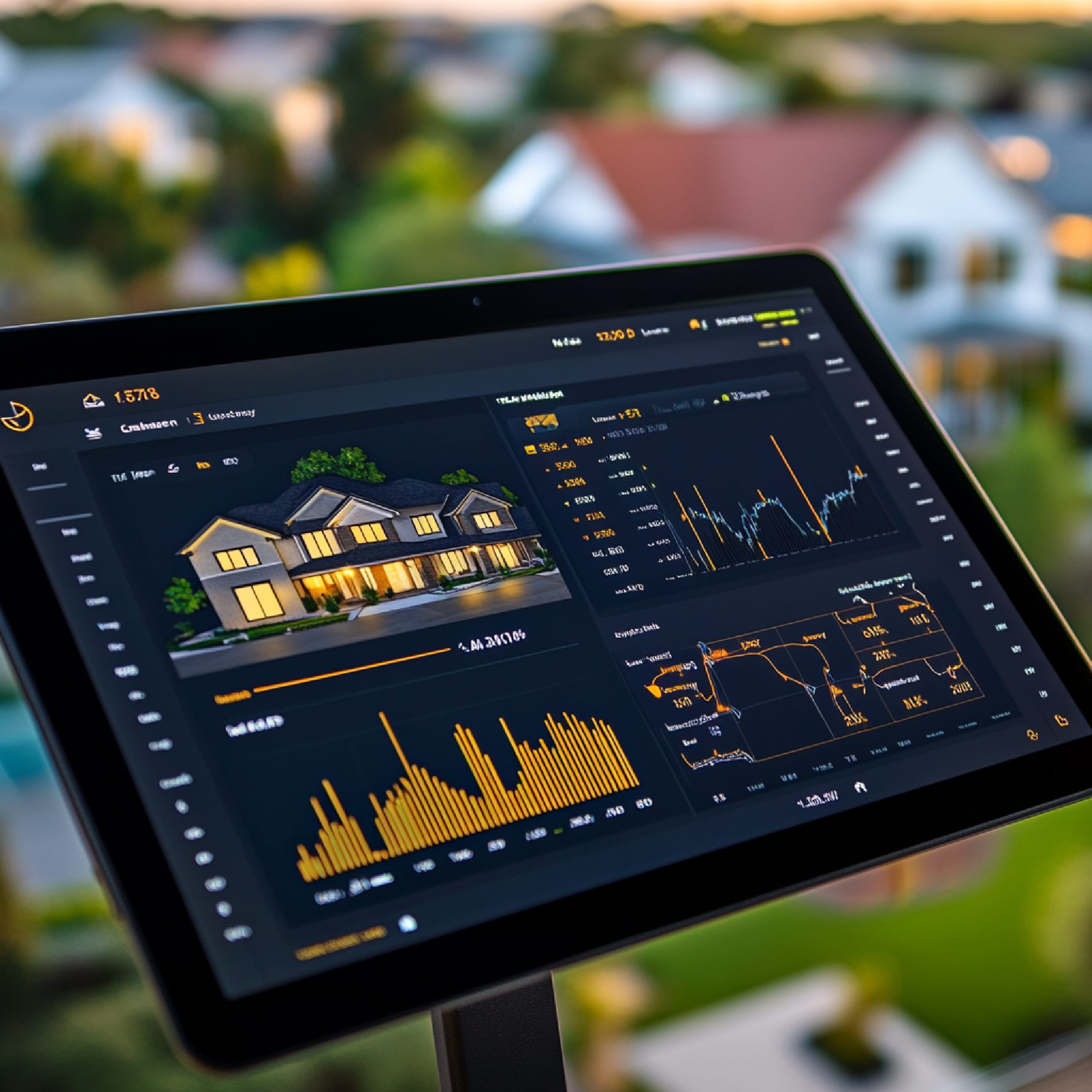
Not all AI-generated data points are equally useful when you are underwriting a flip. Here are the metrics that directly affect your decision-making:
- Property Condition Score. Classifies the property's physical state from listing photos and public records before you visit. Helps you decide whether a property is worth a site visit and narrows your renovation scope estimate upfront.
- ARV Estimate. AI model trained on comparable sales, neighborhood trends, and property characteristics. More accurate than manual CMA for active markets with high transaction volume.
- Renovation Cost Estimate. Line-item projections by trade category, adjusted for local labor rates and property-specific inputs. Use this to set your max allowable offer and internal rehab budget.
- Investment Potential Score. Forward-looking score (0-100) calculated from projected ROI across purchase price, renovation cost, holding costs, and resale value. Categorizes properties as No Potential, Good, High, or Excellent, enabling fast screening across dozens of candidates.
- Price Flexibility Score. Predicts how likely a seller is to accept a below-asking offer based on days on market, seller motivation signals, and comparable sale velocity. This is the negotiation tool most flippers overlook.
- Flip Return Projection. Automated net profit calculation: ARV minus purchase price, minus rehab costs, minus holding costs, minus selling costs. Removes the optimism bias that manual spreadsheets are prone to.
AI-Powered vs. Manual Flip Analysis: A Comparison
| Feature | Manual Analysis | AI-Powered Analysis |
|---|---|---|
| ARV Estimation | 3–5 comps, manual adjustments | 100s of comps, auto-adjusted |
| Renovation Cost Estimate | Contractor walkthrough + national averages | Line-item by trade, localized to market |
| Property Condition Assessment | On-site inspection required | Computer vision from listing photos |
| Time Per Deal Analysis | 4–8 hours | Under 5 minutes |
| Offer Price Confidence | Subjective | Data-backed with confidence intervals |
| Market Trend Signals | Manually researched | Continuously updated |
How to Integrate AI Tools Into Your Flip Workflow

The biggest mistake investors make with AI tools is using them in isolation, checking ARV with one platform and renovation costs with another, then reconciling manually. That introduces the same error risk you were trying to eliminate.
The more effective approach is using a platform that connects these data points into a single underwriting workflow. When ARV, renovation cost, condition score, and investment potential all come from the same model trained on the same dataset, they are internally consistent. Your deal math does not fall apart because two different tools made different assumptions about the same property.
Here is how this looks in practice for a flip underwriter:
- Run a property address through AI search. The platform returns condition score, ARV estimate, renovation cost range, and investment potential score in seconds.
- Apply the 70% rule (or 65% in tighter markets). With AI-generated inputs, your maximum allowable offer is based on data rather than intuition.
- Check the Price Flexibility Score. If the seller shows high motivation signals, you may have room to offer below your calculated ceiling and capture additional margin.
- Use the renovation cost breakdown to scope the rehab. Cross-reference with your contractor's line-item quote and flag any category where the two diverge significantly.
- Stress-test with the Flip Return Projection. Run the deal at base case, a 10% renovation overrun, and a 5% ARV miss. If it still pencils at the downside scenario, you have adequate margin of safety.
This workflow replaces hours of manual research with a structured, repeatable process you can apply across every deal in your pipeline. Access it through Full Property Reports or via the platform's real estate APIs for teams building custom underwriting tools. Investors evaluating multiple deals per week can also use AI Investment Property Search to pre-screen opportunities before running the full analysis. For a deeper dive on the complete flipping process, see how to flip homes with AI.
Key Takeaways
- The fix-and-flip market delivered a 25.5% average gross ROI in 2025, the lowest since 2008, making accurate deal underwriting more critical than ever.
- AI-powered ARV tools process hundreds of comparable transactions simultaneously, reducing the estimation errors that compress flip margins in tight markets.
- Renovation cost AI generates line-item projections calibrated to local labor rates and property-specific condition, replacing national averages that miss local variance.
- Homesage.ai's platform connects ARV modeling, Renovation Cost estimation, Property Condition scoring, and Investment Potential scoring across 155M+ US properties, delivering integrated underwriting data in a single workflow.
- The most effective flip underwriting combines AI data inputs: ARV, renovation cost, condition score, Price Flexibility Score, with the investor's local market knowledge and final judgment.
Seeing is believing when it comes to AI-powered property analysis. The video below walks through how Homesage.ai calculates ARV and runs automated comps, the same capabilities that power the flip underwriting workflow covered in this post.
Conclusion
In a market where flip ROI has compressed to multi-decade lows, the investors closing profitable deals consistently are the ones who eliminated guesswork from their underwriting. AI tools for house flippers have matured to the point where ARV accuracy, renovation cost estimation, and investment potential scoring are data science problems, not gut-feel exercises.
The competitive edge in 2026 is not finding more deals. It is analyzing them faster and more accurately than the next investor, and walking away from the ones that do not pencil before you have committed time and capital.
People Also Ask
Q: What AI tools do house flippers use to calculate ARV?
A: House flippers use AI-powered valuation platforms that apply machine learning to comparable sales data, property condition assessments, and neighborhood trends to estimate after-repair value. Homesage.ai generates ARV projections across 155M+ US properties, adjusting for property-specific features and updating as new market data becomes available. For a step-by-step breakdown, see how to calculate ARV with AI.
Q: How accurate is AI renovation cost estimation for house flips?
A: AI renovation cost tools generate line-item estimates by trade category: plumbing, electrical, HVAC, kitchen, bathrooms, roofing, calibrated to local labor rates and property condition. Accuracy depends on the quality of condition data fed into the model. Platforms that use computer vision to grade condition from listing photos deliver significantly tighter estimates than tools relying on national averages alone.
Q: What is the 70% rule in house flipping, and how does AI improve it?
A: The 70% rule states that a flipper should pay no more than 70% of ARV minus renovation costs. AI improves this framework by replacing subjective ARV and renovation estimates with data-driven projections, reducing the error margin that makes the rule fail in practice. In today's compressed-margin market, many investors apply a 65% rule for additional buffer against ARV overestimation and unexpected carrying costs.
Q: Is house flipping still profitable in 2026?
A: According to ATTOM Data's 2025 Home Flipping Report, flips generated a 25.5% average gross ROI in 2025, the lowest since 2008. Profitability remains achievable but requires precise deal selection, accurate renovation budgeting, and disciplined maximum offer calculations. Markets with strong fundamentals continue delivering above-average returns for investors using data-driven underwriting.





N April 11, 2026
Great Read!
Val April 11, 2026
Very relevant content!
Mike April 13, 2026
AI is a must-have tool for searching investment properties!