
Artificial intelligence (AI) is no longer a buzzword but a transformative force in every major industry, and real estate is no exception.
Explore the full playbook on AI real estate investing.As we step into 2026, AI in real estate is fundamentally changing how data is sourced, analyzed, and acted upon—unlocking immense competitive advantages for agents, investors, brokers, and consumers.
Gone are the days of relying solely on intuition or time-consuming manual research. Now, decisions are powered by machine learning, computer vision, and predictive analytics, turning complex datasets into actionable insights. But what are the main ways AI is reshaping real estate data in 2026?
Below, we delve into three game-changing trends, supported by industry-leading platforms and real-world applications.
1. AI-Driven Property Search, Analysis, and Investment Decision-Making
Perhaps the most noticeable transformation is how AI enhances the property search and investment selection process. In 2026, platforms powered by AI help users not just find listings, but deeply understand and select the best opportunities—in seconds rather than hours.
For a deeper look at how leading providers compare, explore our article on Homesage.ai or ATTOM Data: When to Use Each Real Estate API.
Homesage.ai: A Leader in AI Real Estate Intelligence
Homesage.ai stands out as a premier example of this transformation. Their platform has set a new industry standard, enabling real estate investors, agents, and lenders to make data-backed decisions at unprecedented speed and accuracy.
Key Features of Homesage.ai
- Aggregates 140M+ Properties: Pulls data from MLS, off-market, rental, auction, and “for sale by owner” listings nationwide
- Advanced AI Analytics: Uses proprietary machine learning and computer vision to evaluate property conditions, renovation potential, rental yields, and geographic risk—all with a level of detail and objectivity that surpasses human analysis
- Instant Property Reports: Generates comprehensive, customizable reports in seconds, allowing investors or agents to compare opportunities side-by-side
- Automated Alerts: Sends daily, custom-curated lists of properties that match each client’s investment profile and risk tolerance
- API Integrations: Seamlessly connects its analytics with CRM and other business platforms, ensuring agents, teams, and brokerages always have the latest intelligence at their fingertips
This quick tutorial demonstrates how to generate comprehensive investment reports from any property address in seconds. Watch as real estate professionals access critical metrics like ARV, price flexibility scores, flip scenarios, and rental strategy comparisons.
Why do professionals trust Homesage.ai?
- Time Saving: Reduces research and diligence from hours to minutes
- Uncovers Hidden Value: Identifies underpriced or overlooked “gems” using factors like neighborhood trends, historical performance, and renovation scores
- Performance Edge: Their negotiation score algorithm helps users spot the best moments for making offers or negotiating prices
Homesage.ai empowers every stakeholder to act confidently, maximize ROI, and stay ahead of the competition.
Ready to see the power for yourself? Visit Homesage.ai and experience their AI-driven property intelligence firsthand.
Benefits of AI-Driven Property Search & Investment Decision Platforms
- Hyper-personalized recommendations: Matching buyers with properties based on granular preferences (location, amenities, risk factors, and expected ROI)
- Objective scoring systems: Reducing emotional bias and surfacing the real best-fit properties
- Short-term and long-term value analysis: Not just what a property is worth today, but its projected future performance and rental yield
- Geographic intelligence: Factoring in neighborhood trends, crime rates, amenities, and even local school performance to provide comprehensive evaluations
2. Predictive Analytics and Automated Valuation: Smarter Decisions Before the Market Moves
The second transformative trend in AI in real estate is the rise of predictive analytics and automated valuation models (AVMs). These systems use massive datasets—not just on sales, but on local economy, infrastructure, population growth, and socio-economic trends—to forecast market movements and property values with exceptional precision.
Benefits of Predictive Analytics & Automated Valuation
- Removes guesswork: Market and price predictions are now evidence-based, not speculative
- Accelerates deal timing: Institutional and individual investors alike can time acquisitions and liquidations for optimal returns
- Reduces manual labor: Automated tools replace tedious “comp missions” and local market deep-dives with a few clicks
How Predictive Analytics is Shaping Real Estate in 2026
- Provides near real-time updates as new sales or economic data emerge
- Delivers price recommendations factoring in trends nobody but AI could spot
- Minimizes valuation risk for buyers, sellers, lenders, and insurers
- Allows for rapid, bulk analysis across entire portfolios—no more property-by-property research
3. Automated Property Management and Client Engagement
AI isn’t only changing how properties are found and valued—it’s overhauling how they’re managed and how real estate businesses engage clients. From smart building operations to AI-powered CRM, landlords, investors, and property managers benefit from automation, efficiency, and cost-savings.
Major Examples in Automated Management
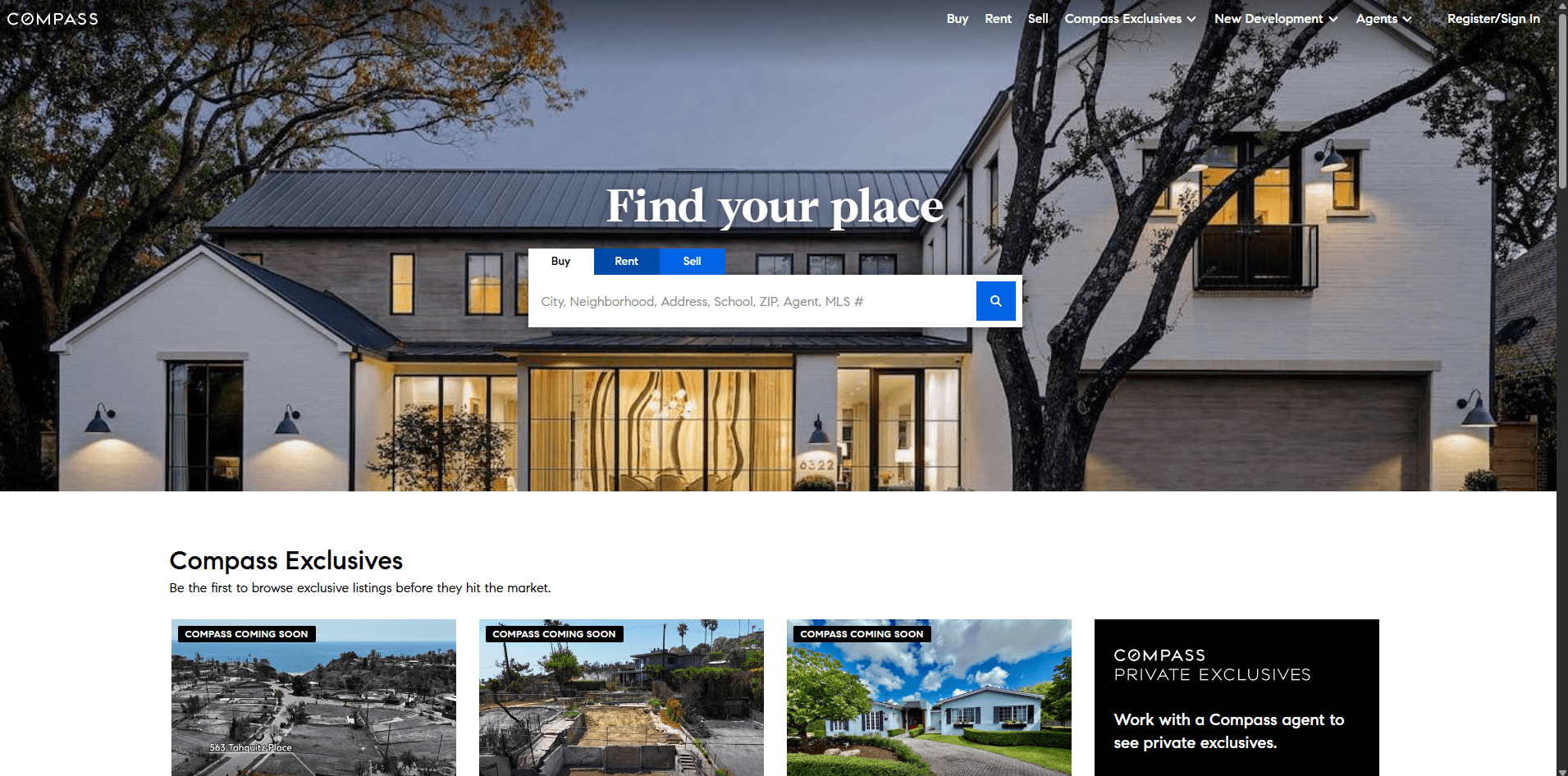
Compass uses AI to streamline both property and client management:
- Smart Maintenance & Operations: AI schedules preventative maintenance, predicts repairs, and tracks work orders automatically, slashing downtime and unexpected expenses
- Tenant Experience: Chatbots provide 24/7 support, answering questions, taking repair requests, and managing appointments—all without human intervention
- Personalized Client Engagement: AI-enhanced CRM systems score leads, track behaviors (such as property search patterns), and automate follow-ups to ensure no prospect falls through the cracks
- Document & Contract Automation: From lease generation to compliance checks, paperwork downsizes from days to minutes, reducing errors and legal risk
Hybrid models (AI + human agents) are now common: AI handles repetitive, high-volume tasks and data analysis, while humans focus on relationship-building and negotiation.
Table: AI Use Cases Reshaping Real Estate Data in 2026
AI Application | Major Benefits | Core Tasks Automated | Leading Companies |
Smart Property Search | Saves time, uncovers hidden value | Filtering, personal recommendations | Homesage.ai, Zillow |
Automated Valuation Models | Accurate, fast, unbiased pricing | Instant AVMs, bulk comp analysis | CoreLogic |
Predictive Analytics | Future-proof investments & risk | Market forecasting, trend alerts | Redfin |
Property Condition Analysis | Fast, objective, scalable inspections | Computer vision property assessments | Homesage.ai, Clear Capital |
Smart Maintenance Scheduling | Lower cost, fewer surprise failures | Preventative scheduling, repair triage | Modern Realty, AppFolio |
Chatbots/CRM AI | Better service, higher close rates | Inquiries, lead scoring, auto-follow-up | Compass |
Other AI-Driven Developments in Real Estate for 2026
- Virtual and Augmented Reality Tours: AI curates features and adapts virtual tours to highlight what each buyer values most.
- Bulk Data Mining: Rapid analysis of millions of transactions to spot pricing anomalies or new “hot” neighborhoods before competitors.
- Fraud Prevention: AI sifts through documentation, identifying signs of title fraud, financial anomalies, or compliance risks.
Industry Insight: According to JLL’s global market report, AI’s ability to process unstructured data at scale is now central to smart development, procurement, and property management. Investors, meanwhile, follow Forbes’ insight on using AI to keep pace with market volatility and consumer demands.
AI Adoption and Market Impact
Recent developments in January 2026 show AI adoption accelerating faster than predicted. Major institutional investors now require AI-powered due diligence reports as standard practice, with platforms like Homesage.ai becoming essential infrastructure.
Firms using AI analytics are closing deals 40% faster and identifying investment opportunities 3-5 days before competitors still relying on traditional methods.
The future is now:
- The AI in Real Estate market is projected to grow from $222B (2024) to over $300B in 2026 and nearly $990B by 2029.
- 60%+ of agencies and investment firms plan major AI investments this year as automation and analytics prove to directly boost efficiency and profit margins.
- Customer satisfaction scores are rising industry-wide where AI-driven platforms are adopted, due to transparency, faster service, and smarter property matching.
For further reading, visit:
- Morgan Stanley: How AI Is Reshaping Real Estate
- JLL: Artificial Intelligence and Its Implications for Real Estate
- Forbes: AI’s Transformative Impact on Real Estate
Key Takeaways
AI is fundamentally transforming how real estate professionals find, value, and manage properties in 2026. The shift from manual research to machine learning-powered insights is creating massive competitive advantages for those who embrace these tools early.
- AI-powered property search platforms like Homesage.ai analyze over 140 million properties to surface hidden investment opportunities in seconds, using proprietary algorithms that evaluate property condition, renovation potential, and neighborhood trends beyond human capability.
- Automated Valuation Models (AVMs) now deliver real-time, hyper-local property valuations by analyzing massive datasets including sales history, infrastructure projects, and socio-economic trends—removing guesswork and human bias from pricing decisions.
- Predictive analytics forecast market movements and property performance with exceptional precision, allowing investors and lenders to time acquisitions, identify risks, and optimize portfolios before market shifts occur.
- Automated property management systems streamline operations through AI-scheduled maintenance, 24/7 chatbot support, and smart CRM tools that score leads and automate follow-ups—reducing operational costs while improving tenant and client satisfaction.
- The AI real estate market is exploding—growing from $222B in 2024 to over $300B in 2026, with 60%+ of agencies planning major AI investments this year to stay competitive.
- Speed and accuracy are now non-negotiable: Platforms offering instant property reports, negotiation scores, and API integrations (like Homesage.ai’s suite of tools) empower professionals to make data-backed decisions in minutes instead of hours, directly impacting ROI and deal closure rates.
Conclusion
AI in real estate is more than a technological advancement—it’s the new DNA of the industry in 2026.
Whether you’re making smarter investments with Homesage.ai, de-risking portfolios with predictive analytics, or streamlining operations with automated management tools, the opportunities have never been greater for those ready to embrace AI-powered real estate data.
This new era means decisions are faster, more reliable, and more profitable. If you want to compete—and win—in the modern real estate landscape, integrating AI solutions is no longer optional. The only question is: How quickly will you adapt?
People Also Ask: How AI Is Changing Real Estate Data in 2026
Q1: How is AI making property discovery and investment easier in 2026?
A: AI-driven platforms like Homesage.ai are transforming property discovery and investment in 2026 by delivering instant, personalized results that were previously impossible.
Homesage.ai, for example, analyzes millions of property listings—including MLS, off-market, and “for sale by owner” data—with advanced AI and computer vision. This allows buyers and investors to:
- Receive Custom-Tailored Matches: Homesage.ai’s algorithms account for user preferences, investment goals, location, and budget, providing a curated list of high-potential properties daily.
- Spot Hidden Opportunities: The platform automatically highlights undervalued or overlooked properties—often before they become widely known—giving users a valuable market edge.
- Instant Property Analysis: In seconds, users get comprehensive reports showing estimated ROI, renovation potential, rental yield projections, and even negotiation score recommendations.
- Streamline Decision-Making: With features like voice-activated search and mobile optimization, Homesage.ai makes it easy to search, schedule, and act on opportunities anytime, anywhere.
Ultimately, platforms like Homesage.ai empower real estate professionals and investors to find, vet, and move on the best deals faster and more confidently than ever before.
Q2: How accurate are automated valuations using AI in 2026?
A: Automated Valuation Models (AVMs) in 2026 are driven by advanced AI, making their property estimates both rapid and highly precise. These models analyze large datasets—including historical sales, market trends, property imagery, neighborhood statistics, and even nearby infrastructure projects—to deliver real-time, data-backed valuations.
Many lenders and investment groups now rely on AVMs as a primary resource for pricing property, ensuring that valuations are consistent, unbiased, and continuously updated as new information becomes available.
- Visual Analysis: Some AVMs now integrate computer vision to assess the property’s physical condition, upgrades, and curb appeal.
- Objective and Dynamic: Automated models remove human bias and adapt instantly as new data emerges.
- Trusted Industry-Wide: Institutions use AVMs for loan approval, portfolio management, and risk assessment, speeding up the buying and selling process.
Q3: Can real estate transactions be fully automated by AI now?
A: In 2026, AI handles the majority of routine transaction steps in real estate—from lead capture and initial screening to document preparation, compliance checks, and scheduling. Powerful platforms automate:
- Lead Nurturing & Qualification: AI-powered CRM tools score leads, automatically follow up, and keep prospects engaged.
- Document Creation: Digital assistants generate compliant contracts, disclosures, and agreements in minutes.
- Transaction Management: Workflow is streamlined as AI tracks milestones, manages escrow, and reminds all parties of deadlines.
However, the most successful real estate firms combine these automated tools with human expertise for negotiation, final contract review, and relationship management. This hybrid approach delivers maximum efficiency without sacrificing trust or personalized service.





— October 27, 2025
Wonderful work! This is the type of info that should be shared around the web. Shame on the search engines for not positioning this post higher! Thanks =)